
TCA Cross
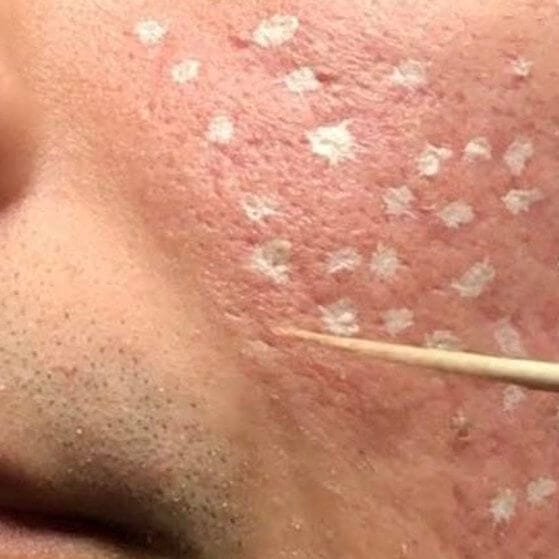
Acne may result in atrophic, hypertrophic, or keloid scars. One option to treat scarring is with TCA Cross.
What is TCA Cross and how does it work?
TCA Cross is the chemical reconstruction of skin scars (CROSS) using trichloroacetic acid (TCA). It is most often used to treat atrophic acne scars.
TCA Cross helps improve acne scars by stimulating your skin to rebuild itself from the inside out.
- a small amount of high-strength TCA solution is applied directly into each individual scar
- this causes a controlled reaction in the skin, which triggers new collagen production in the deeper layers.
- as the collagen rebuilds over the following weeks, the base of the scar gradually rises and the edges become smoother, leading to a more even skin texture.
TCA Cross is especially effective for deep, pitted scars such as ice-pick or boxcar scars.
Frequently Asked Questions
Is TCA Cross right for me?
TCA CROSS may be right for you if you have deep, pitted acne scars such as ice-pick or boxcar scars that have not improved with other treatments.
It is ideal for targeting individual scars rather than treating the whole face, making it a great option if your scarring is more textural than pigmented.
During your consultation, our experienced doctors and dermatologists will assess your scarring and talk through the merits of different scarring treatments. They will help you decide on the most appropriate approach to remove or minimise your acne scars
What sort of scars does TCA Cross treat?
- Boxcar acne scars
- Rolling acne scars
- Ice-pick scars
How is TCA Cross Performed?
TCA Cross is technically straightforward to perform and can be undertaken in a matter of minutes, depending on the number of scars being treated. It is generally repeated on several occasions at 2 to 4-week intervals.
- The skin is cleansed with chlorhexidine/saline-soaked gauze.
- A fine blunt end-point instrument (such as a toothpick) is dipped into TCA and the excess is removed.
- TCA is applied to the base of the atrophic scar.
- The instrument is removed at the start of frosting of the skin surface (usually within 10 seconds).
- The procedure is repeated for appropriate remaining scars.
- The skin is cleansed using saline/chlorhexidine soaked gauze.
Types of Scarring
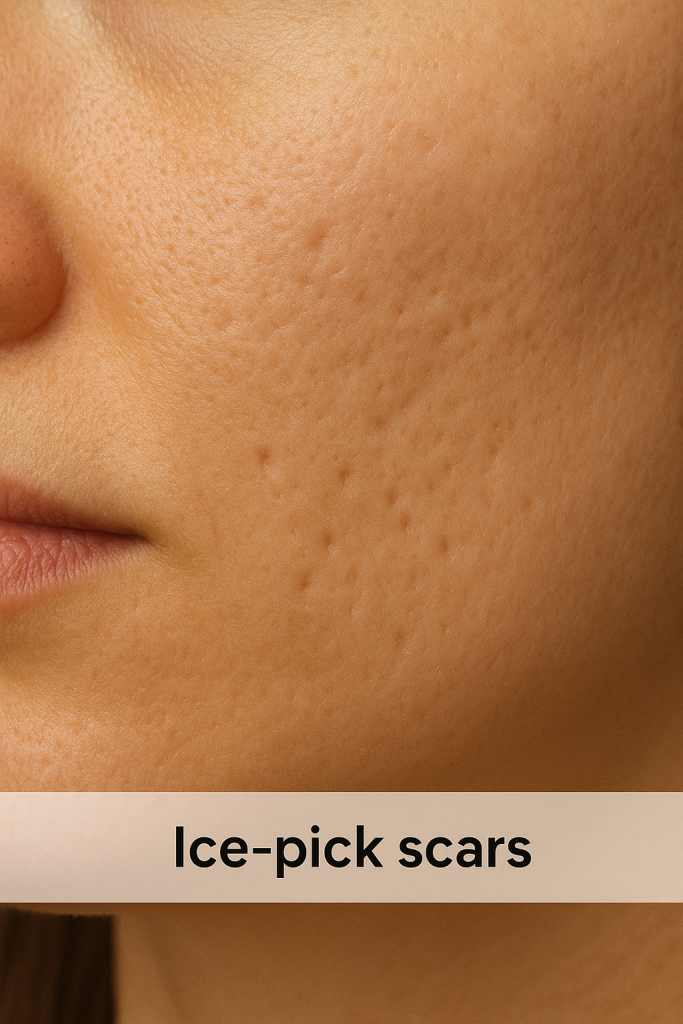
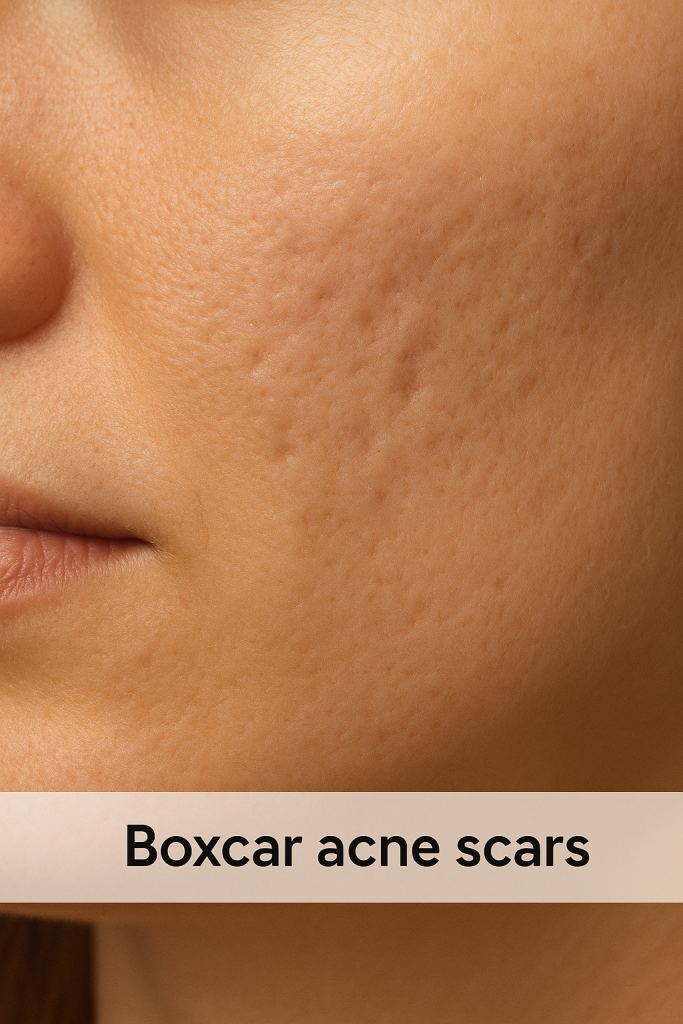
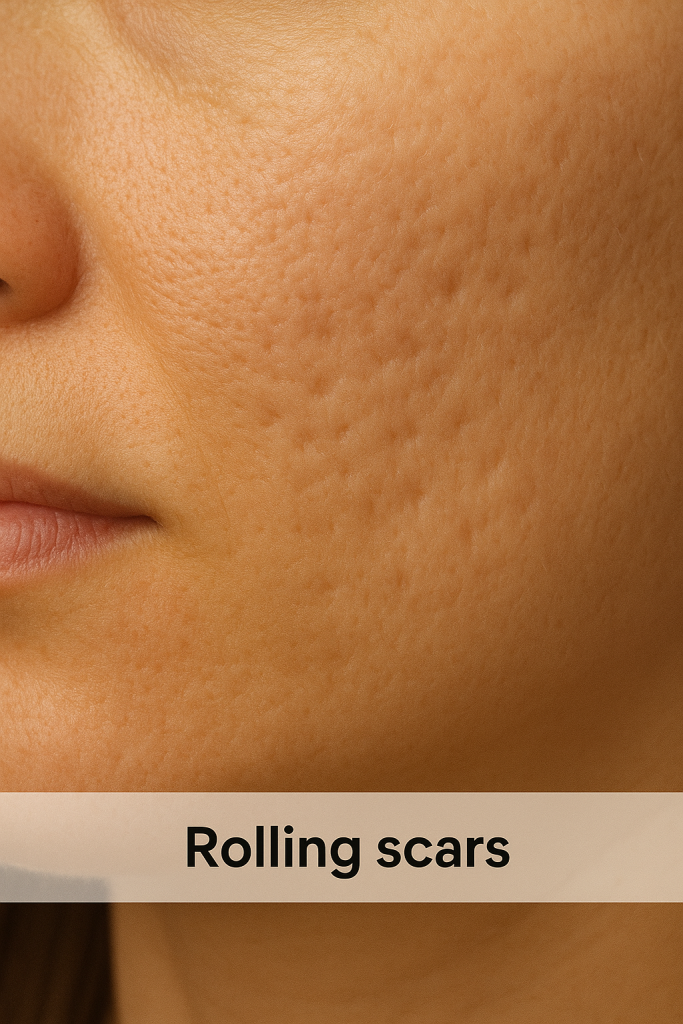
What are Ice-pick scars?
These are narrow, deep, and sharply defined acne scars that extend into the deeper layers of the skin.
They resemble tiny puncture wounds or enlarged pores and are typically <2 mm wide but extend deep into the dermis.
Appearance: Small, V-shaped indentations
Cause: Severe inflammation that destroys skin tissue, creating a narrow channel.
What are Boxcar scars?
These are broad, defined depressions in the skin with sharp vertical edges and a flat base.
They are wider than ice-pick scars and more sharply defined than rolling scars.
Appearance: Round or oval depressions with steep sides (similar to chickenpox scars)
Cause: Loss of collagen following inflammatory acne.
What are Rolling scars?
Rolling Scars are broad depressions in the skin with indistinct, sloping edges.
They create a wave-like or undulating appearance on the skin surface.
Appearance: Soft, rounded depressions (U-shaped) that make the skin look uneven
Cause: Fibrous bands tether the skin down to deeper structures, pulling it inward.

Proven Secrets: Eliminating Acne and Scarring eBook
Take a look at clinic founder, Holly Mason’s, recently published book about proven secrets in eliminating acne and scarring.

Free Download: Acne Top Tips
Acne can be controlled but not cured. Seeking and following professional advice and having the right treatment plan are key to managing and keeping it under control.