
Detection Skin Cancer
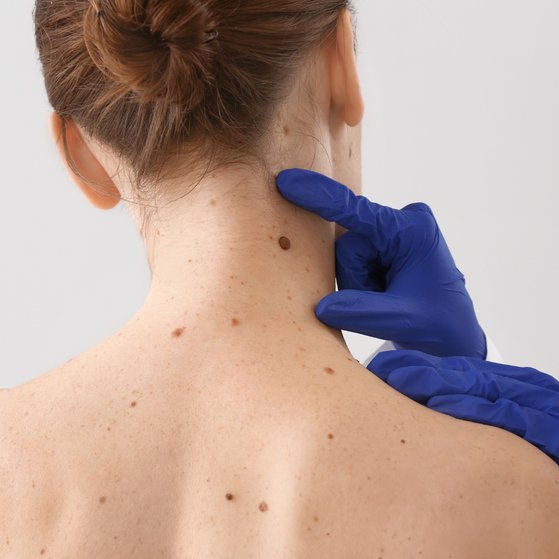
Concerned about a mole? Don't delay, Book a Mole Check
Skin cancer rates are rising across the UK, making it more important than ever to stay aware of changes in your skin. Many cases can be treated quickly and effectively when caught early—often by simply spotting a new or changing mole. Regular skin and mole checks give you peace of mind, help identify concerns early, and ensure you’re taking proactive steps to protect your long-term health.
Be vigilant and get checked by a professional.
✔ Fast, thorough and professional checks by our dermatologists
✔ No referral necessary
How Much Does a Mole Check Cost?
A mole check with one of our Dermatologists costs from £200 – £240 (please remove all nail varnish before you appointment)
Types of Skin Cancer
Skin cancer generally falls into two main categories: melanoma and non-melanoma skin cancers.
Melonoma
Melanoma is the most serious type, developing from melanocytes—the cells that give skin its pigment. It can grow and spread quickly if not detected early, which is why monitoring moles for changes in size, shape, colour, or symmetry is so important. Melanoma often appears as a new mole or a change in an existing one, and early treatment dramatically increases the chance of a full recovery.
Non-Melanoma
Non-melanoma skin cancers are more common and typically less aggressive, but still require prompt attention. The two main types are basal cell carcinoma (BCC) and squamous cell carcinoma (SCC). BCC is the most frequently diagnosed skin cancer and usually appears as a shiny bump, pink patch, or slow-growing sore. It rarely spreads but can cause significant local damage if ignored. SCC tends to be firmer, scaly, or crusted and can develop from long-term sun exposure or precancerous lesions such as actinic keratoses. While SCC carries a higher risk of spreading than BCC, both are highly treatable when identified early—making regular skin checks essential for prevention and peace of mind.
There are useful resources about the types of skin cancer available here
Frequently Asked Questions
Why is important to check your skin and get an annual mole check?
The increasing rise in cases of skin cancer, including malignant melanoma, should make everybody aware of the importance of an early diagnosis.
- It is important to regularly check your skin and family member’s skin for any changes that could indicate skin cancer.
- Early detection is key to successful treatment, and the sooner skin cancer is identified, the more likely it is to be manageable.
- We offer an annual skin and mole check to give you greater peace of mind but it is important to get any changes checked at anytime between skin checks.
Cancer prevention and early diagnosis are two of our biggest priorities.
As 90% of skin cancer is caused by excessive sun exposure, it is important for everyone to protect themselves from the sun.
What should I be looking for?
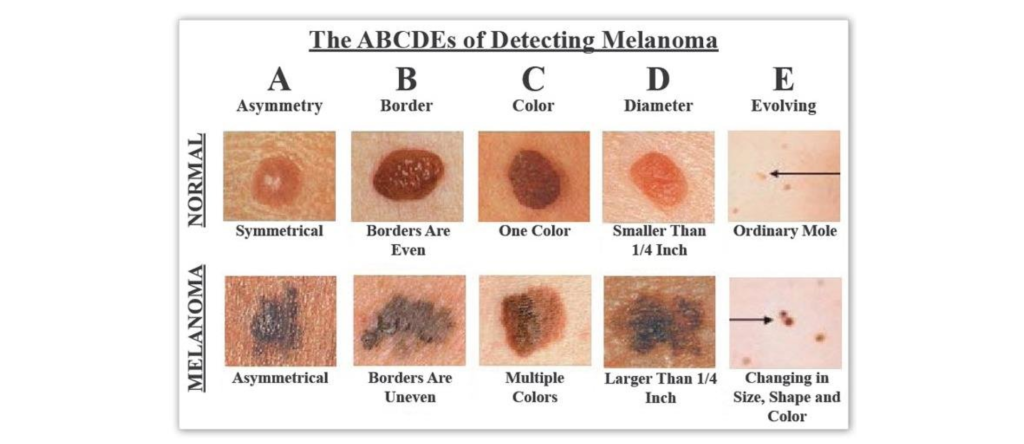
Skin cancer often begins as small, unnoticed growths or changes in existing moles, so it’s crucial to monitor your skin for new spots, changes in shape or colour, or any unusual symptoms like bleeding or itching. See the diagram above for warning signs.
To significantly reduce the risk of serious complications, we recommend:
- Performing a self-exam once a month
- Scheduling professional skin checks with a dermatologist annually
- Protecting your skin from harmful UV exposure at all times of the year
- Be sure to check loved ones skin (especially backs which are hard to self-check)
- Seeking prompt medical attention if you notice anything unusual
Remember, prevention and early detection are the best ways to stay ahead of skin cancer.
Why is Early Diagnosis Crucial?
Early diagnosis is crucial for malignant melanoma, as a treatment for advanced melanoma is rarely effective.
For non-melanoma skin cancer (mainly basal cell carcinoma and squamous cell carcinoma), an early diagnosis is sensible. Early stages of non-melanoma skin cancer manifest as slightly raised red lesions covered by a scab.
These pre-cancerous lesions (actinic keratosis) may develop into basal or squamous cell carcinomas. When diagnosed in this stage, non-surgical treatment is easy, effective, and cosmetically acceptable (no scarring).
How do our Dermatologists check for Skin Cancer?
They use Dermoscopy which increases diagnostic accuracy, reducing the number of unnecessary excisions of benign skin lesions, sparing time, pain, and cost.
Do you offer Mole Mapping?
Mole Mapping is a screening service to map moles on the body from head to toe. The results can be compared to identify changing or new moles over time, including any which show signs of potential malignant melanoma, a common form of skin cancer.
Any moles that appear unusual or require further examination are photographed close-up using specialist technology called a digital photo-dermatoscope. Your photos are then reviewed by one of our doctors who will identify any suspicious moles or lesions.
Please remove nail varnish before your appointment as skin cancer can occur on nails.